By Eric Rodrigues — Founder, The First Chord Academy, Banaswadi, Bangalore
I have been teaching guitar in Banaswadi for years. And in every batch, without fail, the same five mistakes show up in the first few weeks. Not because the students aren’t trying — they are. But because nobody told them these things were wrong.
Most beginners keep making these mistakes for months, sometimes years, before someone finally points them out. By then, the habits are deeply set and take twice as long to undo.
So here they are — the five most common guitar mistakes beginners make, and exactly what to do instead.
Mistake 1: Gripping the Pick Too Tight
This is the most universal beginner mistake, and it affects everything — your tone, your speed, your wrist movement, and your stamina.
When you’re nervous or concentrating hard, your instinct is to hold on tighter. It feels like control. It isn’t. A tight grip kills the natural movement of your wrist, creates tension up your forearm, and produces a harsh, brittle tone instead of a clean, resonant one.
The fix: Hold the pick like you’re holding a feather you don’t want to drop — firm enough that it won’t fly away, loose enough that there’s no tension in your hand. Your wrist should feel relaxed and free to rotate. Practise strumming open strings slowly and focus only on your grip and wrist. If your forearm feels tight, stop and shake it out.
A loose, relaxed pick grip is one of those things that feels wrong at first but sounds immediately better. Trust the process.
Mistake 2: Skipping the Metronome
“I’ll use it later, once I’ve learned the song.”
I hear this constantly. And I understand it — practising with a metronome feels slow and frustrating. It exposes every hesitation, every slightly late chord change, every uneven strum. That’s exactly why it works.
Without a metronome, you unconsciously speed up through the parts you know and slow down through the parts you don’t. Over time, your brain locks in this uneven timing as muscle memory. And bad timing, once embedded, is genuinely one of the hardest things to correct.
The fix: Use a metronome from day one. Set it slower than you think you need to — seriously, 30 to 40 percent slower than the song’s actual tempo. Play at that speed until every chord change is clean and comfortable. Then increase by five beats per minute. Only then.
The metronome isn’t the enemy of flow. It’s the foundation of it.
Mistake 3: Practising Too Fast
This one follows directly from Mistake 2, but it deserves its own space because it’s so common and so damaging.
When you practise too fast, your fingers make mistakes. Your brain notices the mistakes but keeps going anyway, because you’re focused on getting through the song. And every time you play through a mistake, you are practising that mistake. You are literally training your fingers to play it wrong.
There is a phrase I use with every student at TFC: slow is smooth, and smooth is fast.
The fix: Take any section you’re struggling with and cut the tempo in half. Not 80 percent — half. Play it at that speed until it feels almost too easy. Then bring it up slowly. This approach, called chunking, is how professional musicians learn complex passages. It is not a beginner technique — it’s the technique.
If you can play it slowly and perfectly, you can play it fast. The reverse is never true.
Mistake 4: Not Recording Yourself
You cannot hear what you actually sound like while you are playing.
When you play, your brain is busy managing chord shapes, timing, strumming patterns, transitions. It does not have enough processing power left to critically evaluate your tone and technique at the same time. What you hear while you play is not what other people hear when they listen.
Most beginners have no idea they are buzzing a string, muting a note accidentally, or rushing the bridge — because they’ve never listened back to themselves.
The fix: Record yourself. Your phone camera is enough. You don’t need a studio setup. Just prop your phone up and record a practice session — even five minutes. Then watch it back. Not to cringe, but to observe. You will immediately hear things you cannot hear while playing. Do this once a week minimum.
This single habit will accelerate your progress faster than almost anything else.
Mistake 5: Ignoring Music Theory
“I just want to play songs. I don’t want to learn theory.”
I understand this completely. Theory sounds academic and dry. And honestly, you do not need a music degree to play guitar well. But dismissing theory entirely is like learning to drive by memorising which buttons to press — it works until something unexpected happens, and then you’re lost.
You don’t need to know everything. You need to know enough to understand why things work — why certain chords sound good together, why a melody creates tension and resolution, why a riff in a minor key feels different from one in a major key.
Without that foundation, you are completely dependent on tabs and tutorials. You cannot improvise, you cannot figure out songs by ear, you cannot write your own music. You’re playing patterns, not music.
The fix: Start small. Learn what a major scale is and why it matters. Learn the difference between a major and minor chord emotionally, not just technically. Learn what a chord progression is and why the same four chords appear in hundreds of songs across every genre. You can learn these fundamentals in a few sessions. Once you have them, everything else — learning songs, understanding what you hear — becomes dramatically easier and faster.
The Honest Truth About Learning Guitar
None of these mistakes mean you have no talent. They mean you haven’t been taught properly yet.
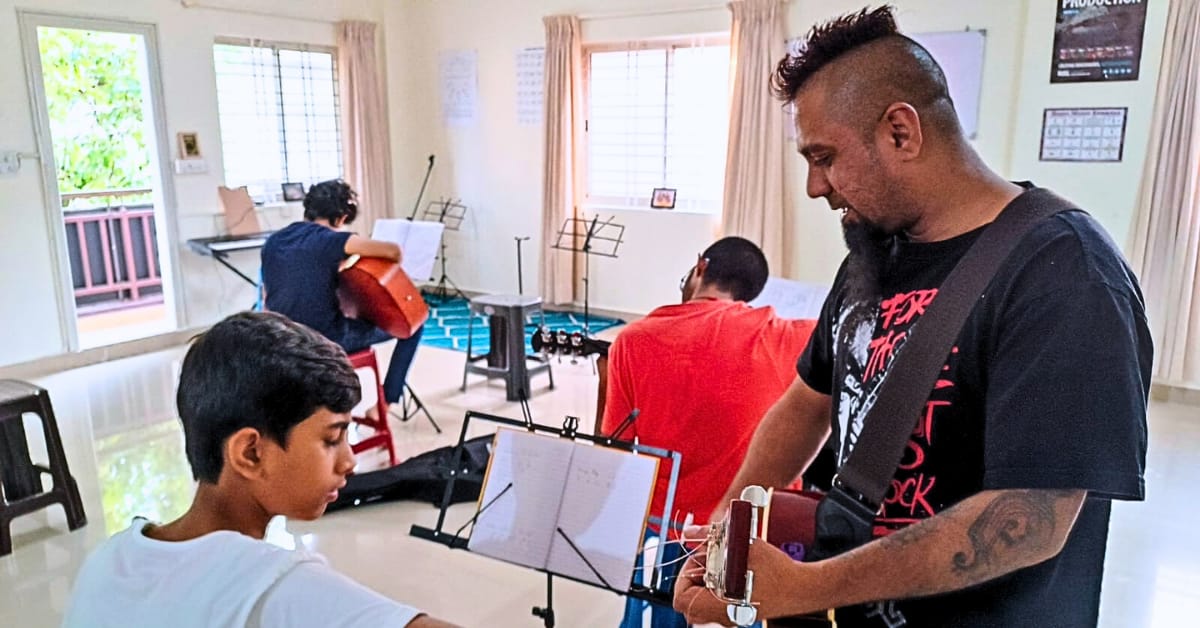
The difference between a student who improves steadily and one who plateaus after three months isn’t ability — it’s the quality of the feedback they receive. A good teacher catches these things early, before the habits are set, and gives you the specific correction you need.
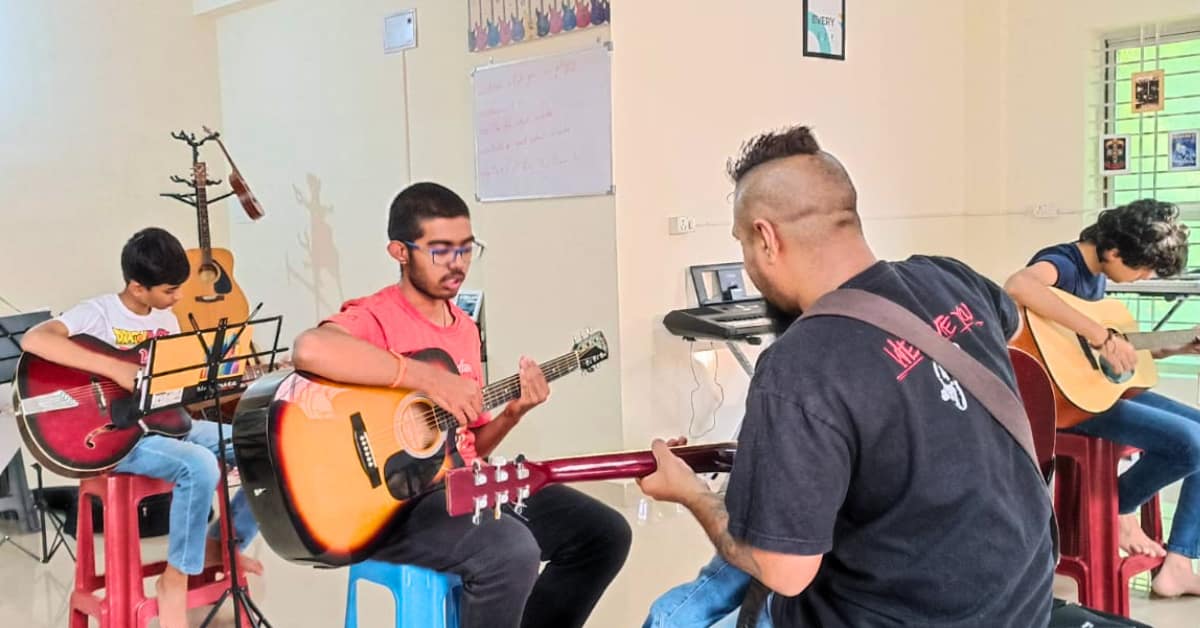
That’s what we do at The First Chord Academy in Banaswadi.
Whether you’re a complete beginner or you’ve been playing for a while and feel stuck, a free trial class gives you a chance to experience structured, individual-attention teaching in a small group setting.
WhatsApp 8217506289 to book your free trial — or if you want to move faster, ask us about TFC Fast Track: 8 private, 1:1 weekend sessions designed to take you from beginner to playing real music in two months.
📍 The First Chord Academy — Above IDBI Bank, Subbanapalya, Banaswadi, Bengaluru 560043 🌐 thefirstchord.com
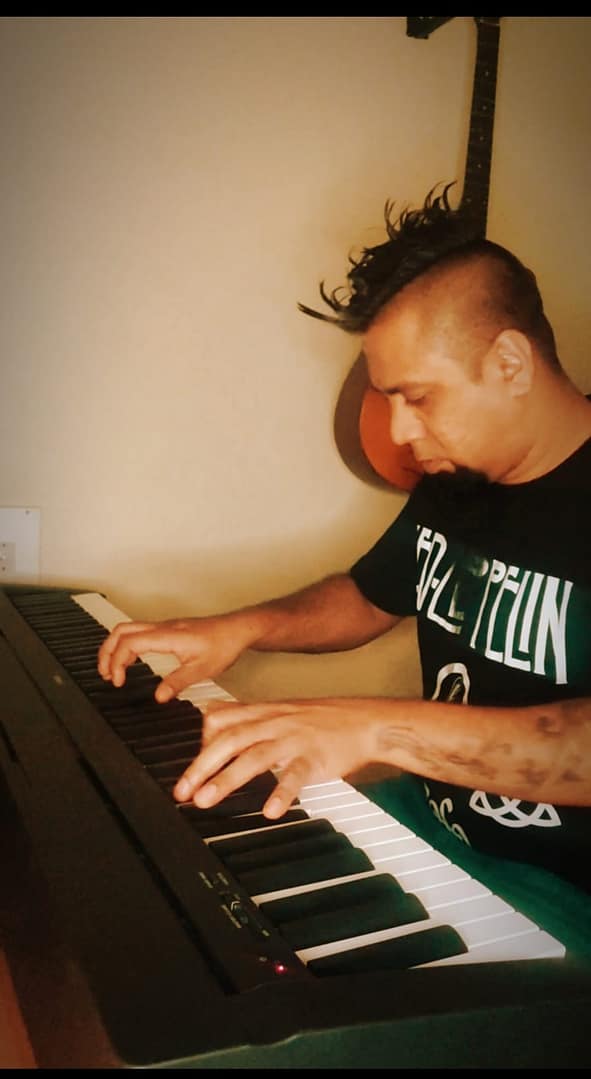
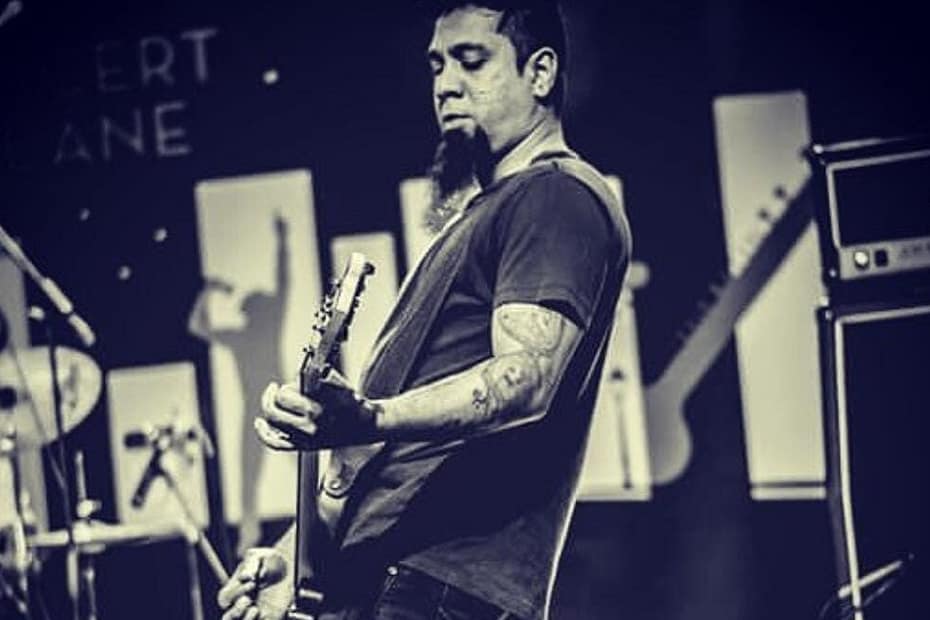
Eric Rodrigues is the founder of The First Chord Academy and has been teaching guitar, keyboard and ukulele in Banaswadi, Bangalore since the academy opened. He teaches Fast Track private sessions personally every weekend.